.png)

To Leverage Scientific Innovation and Discovery to Cure Children’s Heart Disease
Latest News
February 2024
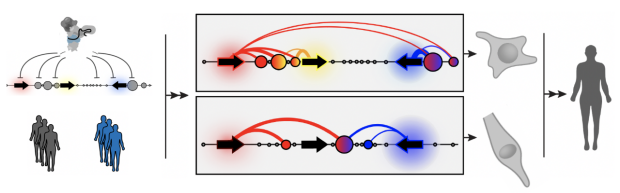
New publication out in Nature from the Engreitz Lab and collaborators at the Broad Institute/Brigham and Women’s Hospital. This study developed a Variant-to-Gene-to-Program (V2G2P) to map how genetic variants affect gene expression and how genes impact biological function, and used this approach to uncover mechanisms underlying coronary artery disease risk. Read more in the Broad/BWH press release here.
Dr. Casey Gifford was selected as a member of Stanford MCHRI's Inaugural Team Science and Translational Medicine Faculty Development Cohort. She will be leading a project focused on “Identifying gene regulatory networks involved in congenital heart disease amenable to therapeutic intervention”.
January 2024
Two BASE postdocs were awarded the American Heart Association Postdoctoral Fellowship! Congratulations to Dr. Megha Agarwal, postdoc in the Gifford Lab, who was selected for her work on “Understanding left ventricular non-compaction through myocardial-endocardial crosstalk using human cardiac organoid”, and to Dr. Chongyang Zhang, postdoc in the Rabinovitch Lab, studying the “Mechanism underlying pulmonary arterial hypertension induced by reduced SOX17 in congenital heart disease”.
December 2023
Warm welcome to the BASE Program’s newest faculty recruit: Dr. Xiaojie Qiu, who also joined the Departments of Genetics and Computer Science. His laboratory will leverage his unique background in single-cell genomics, mathematical modeling, and machine learning to bridge the gap between “big data” from single-cell/spatial genomics and quantitative/predictive modeling in order to address fundamental questions in mammalian cell fate transitions, especially those of heart evolution, development, and disease. Check out more on his lab website here.
BASE is honoring Betty Irene Moore, who passed away on December 12, 2023. Her transformative donation to the Lucile Packard Foundation in 2017 established the Betty Irene Moore Children’s Heart Center and enabled the launch of our Basic Science and Engineering (BASE) Program to find a cure for children's heart disease through discovery and innovation. This generous donation led to the recruitment and support of our four world-class scientists currently building an interdisciplinary program in bioengineering, stem cell biology, genetics and computer science. Read more about her legacy here.
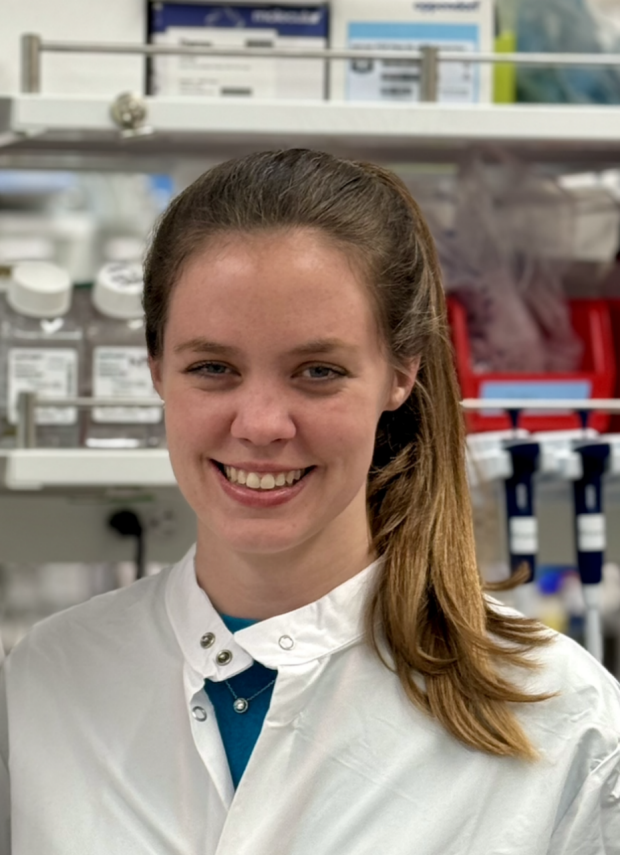
BASE Spotlight: Gabriella Martyn, Postdoctoral Researcher from the Engreitz Lab
What is your role?
I have been a post-doctoral researcher in the Engreitz Lab for just over 3 years now. I’ve been leading a project to develop a new technology called ‘Variant-FlowFISH’, which enables us to precisely introduce non-coding variants into the genome of cells and measure their effects on gene expression.
What do you enjoy most about your role?
Most of my days I spend in the ‘wet lab’, at the bench conducting the experiments which I really enjoy, but I also love designing and planning out experiments and thinking about the scientific questions I want to ask. No day is ever the same! Often the experiments we perform can take months to complete, so of course, the best part is when you get the data back, especially if there is an exciting result! I also really enjoy the teamwork aspect of a lab environment, particularly training and assisting other graduate students or technicians with their projects and watching them grow into independent scientists.
Where were you before you came to Stanford?
I am originally from Sydney, Australia. Before coming to Stanford, I did my PhD at the University of New South Wales in Prof. Merlin Crossley’s Lab, in the field of ‘hemoglobin switching’. I studied a cluster of naturally occurring mutations which elevated fetal hemoglobin levels, and I showed that they functioned by disrupting the fetal globin repressor, BCL11A.
Share a bit about one of your research projects/experiences (past or current):
Here at Stanford, we have recently published a pre-print about our new technology called ‘Variant-FlowFISH’. It’s a high-throughput technology, which combines CRISPR prime-editing with RNA-FlowFISH and it allows us to simultaneously assess the effects of 100’s of edits in a single experiment on gene expression. Such a tool is highly valuable for studying the effects of non-coding variants on gene expression and mapping or identifying key regulatory elements. If you are interested in learning more, please see this link to our pre-print: (Martyn & Montgomery et. al, 2023)
(https://www.biorxiv.org/content/10.1101/2023.12.20.572268v1.full.pdf)
Who is a scientist that inspires you, and why?
As an undergraduate student, I remember being really inspired by a ‘guest lecture’ from Prof. Merlin Crossley (who later became my PhD supervisor). He presented his research on the genetics of Hemophilia B Leyden, an unusual genetic disease that resolves after puberty in young males and I was fascinated by this story. Merlin explained to us the mechanism of the disease, how clusters of mutations were disrupting the binding of transcription factors, resulting in a lack of clotting Factor IX. But the most inspiring part of the story was how they solved the mystery, showing that after puberty, the increase in testosterone levels allowed a different transcription factor (the androgen receptor) to bind to this site, to produce clotting Factor IX. After this lecture, the idea of how non-coding variants can provide clues to solve the puzzle of how genes are regulated and can affect disease was something I was very interested in!
What are your favorite activities outside of work?
Outside the lab, I enjoy most outdoor activities. My favorite activities at the moment are open water swimming in San Francisco Bay and hiking and taking photos out in Yosemite.
What do you hope to be doing 10 years from now?
I hope to still be working in the ‘variant-to-function’ field of genetic research. It’s something which I started researching during my PhD, studying a handful of mutations and now here at Stanford we have a new technology to study 100’s of variants in a single experiment. In 10 years time and with technological advances, it is exciting to think about what will be possible!